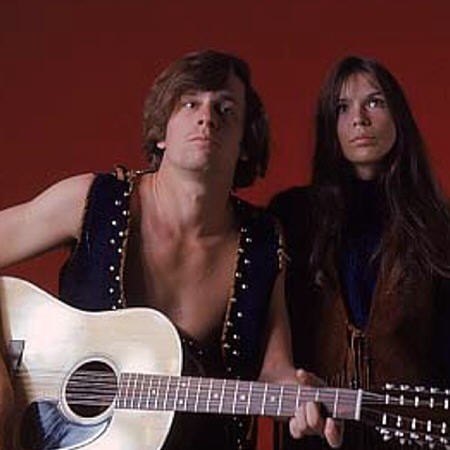
1967-1970
Here we feature bands and of their songs in the years 1967 through 1970.
The Nightcrawlers, The Brass Blues Band, The Chord Jesters, Christopher Rabbit, The Little Queenies, Michael J. Brody
1967
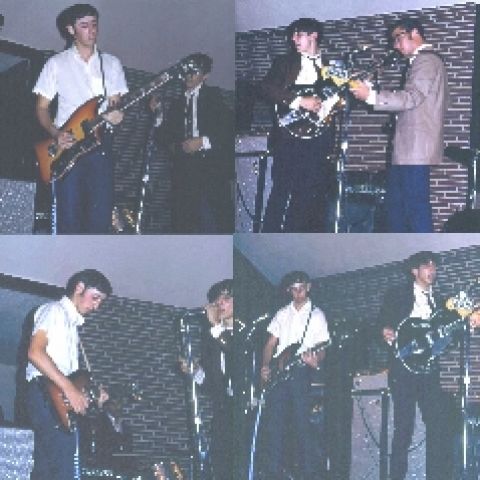
The Nightcrawlers
-
Roger Altman, bass and vocals
-
Bobby Bloomfield, rhythm guitar and vocals
-
Geoff Greenburg. drums and mayhem
-
Gary Kemp, lead
-
Otis Moore, vocals
-
Donny Spitzer, organ
By the end of 9th grade, Donny had been added to the group and the Nightcrawlers were beginning to play school dances and other locations. Group members were becoming more skilled on their instruments and the group’s popularity was growing. During the next year, the Nightcrawlers began appearing all over lower Westchester and youth-oriented venues, bar mitzvahs and sweet 16 parties. After a tumultuous appearance at a YMCA in White Plains, during which the audience stormed the stage and demanded more soul music. Otis was brought on as an additional singer and the group added a large dose of James Brown, Wilson Pickett and Motown repertoire.
The group hit its peak during 1967-68, winning several battles of the bands and appearing in a new band showcase at the Bitter End in NYC. During the summer of 1967 the Nightcrawlers played the beach club circuit in New Rochelle and Mamaroneck and further expanded and refined its sound, adding psychedelic music from Jimi Hendrix and Jefferson Airplane. By now the group was known for its tight instrumentation and exuberant stage presence, and its popularity meant that they were in constant demand. During this period, the group recorded a demo of original songs and appeared on a “Battle of Westchester Bands” compilation album. Perhaps the group’s greatest opening act at the Eastchester High School Prom and the headliners, Little Anthony and the Imperials, never showed up. The Nightcrawlers played for five hours and were so energizing that the crowd never missed Little Anthony.
The Nightcrawlers broke up in the early Spring of 1969. as high school was ending and group members decided to pursue different musical interests.
– Roger Altman
"Stop the Move"
"Walkin Down"
1968
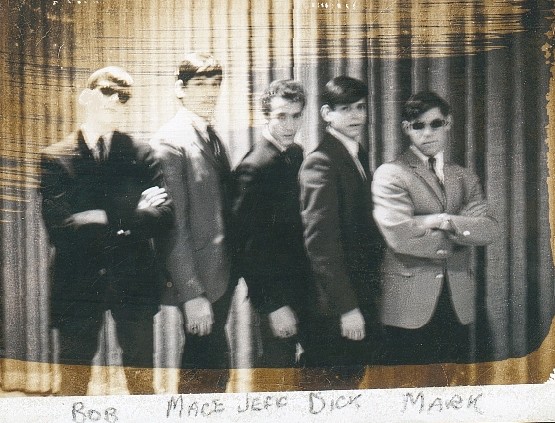
The Chord Jesters
- Richard (Dick) Spitalny, drums
- Mace (Freedman) Edwards, lead guitar, sitar & vocals
- Jeff Levy, lead singer
- Mark Alexander, rhythm guitar & vocals
- Bob Schwartz, rhythm guitar & vocals
- (Occasionally) Joel Feinberg, bass … when not playing with Tyndall Effect (Scarsdale’s own Tijuana Brass)
The Chord Jesters started around 1961/1962 when Mace and Dick started playing songs by the Beach Boys along with Mark and Bob. Their repertoire quickly expanded over the next few years to include music by the Rolling Stones, Simon & Garfunkel and the Beatles.
Early on they played at parties; their first concert was for the student body at Quaker Ridge School, in 1963, after the Beatles burst upon the scene. By this time Louie Louie and Wipe Out had been added.
As things progressed the group was playing at bar/bat mitzvahs; sweet 16 parties; school; temple & church youth group dances; in numerous Battle of the Bands; and, for fraternity parties throughout Westchester. In 1965/1966 music of the Animals and the Young Rascals was added to their ever- expanding set lists.
While playing for a dance at Westchester Reform Temple an attendee, Jeff Levy, approached the group asking if they’d be interested in adding a lead singer. They auditioned Jeff in the men’s room, to take advantage of the tiled walls’ acoustical qualities. He was a strong vocalist and his voice blended very well with Mark’s and (as they say) the rest is history.
Songs such as the Righteous Brothers’ “Ebb Tide”; Simon & Garfunkel’s “Sounds Of Silence”; the Beatles’ “Run For Your Life”; and, “Norwegian Wood” (with Mace on sitar) became some of the band’s favorites featuring harmonies by Jeff and Mark.
After graduating from SHS in 1968 the group disbanded. However, Richard and Mace remained in touch and it so happened they both lived in Boston for a few years at the same time. (Richard with his wife, Dianne, while she received her Masters in performance on Flute from the New England Conservatory while Mace earned his Masters in performance on Guitar from the Berkeley School of Music.)
Mace, tragically, passed away on December 9, 2022. Deeply loved and missed by many.
– Richard Spitalny (2026)
"Run for Your Life"
A Scarsdale-based hard rock group The Other Half (1968-69) changed their name to Christopher Rabbit (1969-1970):
Abby Weissman, bass
Ricky Heller, organ
Danny Sopher, drums
Mark Slifstein, guitar (replaced Steve DeChico)
Johnny Robison, vocals
Christopher Rabbit came in second place behind The Brass Blues Band at the Westchester Battle of the Bands in Spring, 1969.
The pioneering “glitter rock” band (1970-1971) The Little Queenies:
Abby Weissman, guitar
Mark Slifstein, guitar
Chris Kelly, drums
Richard Minchenberg, vocals
Ricky Heller, bass
1968-9
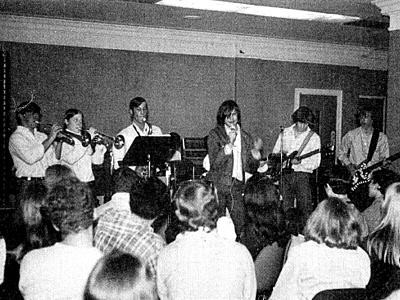
The Brass Blues Band
-
Chuck Kestenbaum, trumpet
-
Sally Abt, trumpet
-
Bobby Auerbach, sax
-
Ted Spencer, drums
-
Bob Elliott, vocals, harmonica
-
Marc Shulman, guitar
-
Gary Hurst, guitar
-
Andy Kreeger, bass
The Story of Brass Blues Band
It was the summer of 1967 when Ken Midtbo introduced me to Bob Elliott. Both of us were currently in Top 40 bands throughout 9th grade that were playing gigs around Westchester. I was in the Uncouth Youth along with Ken Midtbo, Bobby Kan, Richard Davis and Steve Hillman. Bob was currently in the band Stanley with Larry Cohen, Ted Spencer, Craig Fisher and Steve Schnur. As we set off to see the Night Crawlers at a local church, Bob and I realized we shared a passion for the Blues and that was when we had the idea to start a band that didn’t do top 40 but focused solely on the Blues. We co-opted Joey Reingold to play guitar and started listening to lots of blues albums by the likes of Junior Wells, Buddy Guy, Charlie Musselwhite, Albert King, John Mayall, Little Walter and BB King. But we both agreed the band we wanted to emulate was Paul Butterfield’s Blues Band that had released their first album in 1965 followed up in August of ’66 with East-West.
So far, our band currently had a guitarist in Joey, bassist in myself and harmonica/ lead vocalist in Bob. We still didn’t have a drummer, so we borrowed Ted Spencer from Stanley who was our ultimate target, but Ted was doing well and enjoyed playing in Stanley and didn’t want to leave. During this time, we were a work in progress and had numerous rehearsals in various members’ homes in order to perfect the blues sound we wanted to emulate.
Then, in December 1967, Butterfield released his 3rd album, The Resurrection of Pigboy Crabshaw, changing our direction forever. Butterfield had added horns, and in February 1968, Al Kooper released Blood, Sweat & Tears’ debut album, which blended horns with blues-tinged jazz. Determined to emulate those bands, Bob and I began recruiting horn and keyboard players. At the time, Larry Cohen was studying composition at a music school in the city, and for an assignment, he wrote the horn charts we used for the blues band.
After Joey pursued other musical interests, we began searching for a new guitarist. Bob auditioned Marc Shulman, then a freshman. Although the first audition did not work out, Bob invited him back after we decided to add horns and rebuild the band. This time, Marc’s lead guitar playing blew us away. Bringing him in proved to be the band’s best decision, establishing our core lineup: Bob on harmonica and vocals, me on bass, and Marc on lead guitar. To emulate Butterfield, we also needed a second guitarist. Gary Hurst, who had recently moved to Scarsdale from Texas, filled that role with his love of the blues and his singing ability. The original horn section featured Paul Knapland and Sally Abt on trumpet and Bob Auerbach on saxophone. Peter Berkey joined on keyboards, and because Ted Spencer was still performing with Stanley, Gary Lachman played drums.
This line up lasted through a bunch of rehearsals and then in early ’68 we landed our first gig at the Congregational Church. At this point, Paul Knapland has been replaced by Chuck Kestenbaum and Gary Lachmann was replaced by Ted Spencer since Stanley had started to breakup. This served as our main line up for the remainder of ’68 and ’69 with only Peter Berkey moving on and Bob Elliot taking over the keyboards. Gary Hurst then moved on in ’69 which left us with just Marc as our guitarist and sometimes Larry Cohen sitting in with us.
This was the lineup that played the most shows in Scarsdale and the surrounding area from our sophomore through to the end of our junior year. During this time, we won the Westchester Battle of the Bands, performed at numerous sweet sixteen parties, became regulars at the Second Story events, sponsored by the Mid-Westchester YMHA and Spider Web events at the Scarsdale Junior High School. We were asked to play Scarsdale High School assemblies as well as in Vietnam War rallies sponsored locally.
At the end of our Junior year, Ted Spencer’s older brother Courtney hired us to write and record 90-second instrumental pieces which were used by radio DJ’s for voiceovers for smaller sponsors who didn’t have their own music for commercials. It was incredibly exciting to be recorded at Mark Century, by a professional engineer! Additionally, during this time, Bob started writing originals that had a more R&B tinge. We not only recorded these professionally, but then we added them to our set list.
Then in our senior year Ted had to move to Ohio where his dad was named president of Western College for Women. We replaced Ted with Danny Sofer from White Plains who played drums in a similar style to Bobby Colomby from Blood Sweat and Tears. We also needed a new trumpeter since Sally Abt had graduated so Danny brought in his friend JP. During our senior year we really started drawing large crowds that would come see us like a concert rather than as a band to dance to. We were scheduled to perform with the Youngbloods at the prom, but it was canceled due to lack of ticket sales with classmates sighting it was a statement against the Vietnam war. However, we did play at our Senior Class Breakfast. That summer after our senior year, Danny moved on and we replaced him with Steve Petegorsky. That summer a few after we played gigs at Point O’ Woods thanks to David Donaldson.
However, our greatest thrill was on Saturday June 7,1969 three months before The Woodstock Festival, we played the opening set for The Paul Butterfield Blues Band at Scarsdale High School. Butterfield’s expanded 9-piece band included the brilliant young Buzzy Feiten on guitar, and alto saxophone wizard David Sanborn. We got to share the stage with our idols!
Given the large number of Butterfield tunes we did, we felt it best to remove those from our set. However, since we were a harmonica and guitar-based blues band, most of our repertoire was Chicago blues ‘standards’ that Butterfield covered as well. We heard afterwards that Butterfield was upset with our doing their tunes prior to their going on stage and he immediately told his management company to never book another high school gig!
After I graduated and went off to Ohio near where Ted was at school, Bob reconstituted the Band with Steve on drums, Marc on guitar and Frank Canino on bass. The horn section was reduced to 2 saxes. However, in 1972 Buzzy Feiten released Full Moon and that’s when Bob changed the band’s name to Crescent in honor of Full Moon. The repertoire still consisted primarily of blues related tunes, but had expanded to R&B as well as a little Steely Dan and Orleans. I would take Frank’s chair whenever I was home for the holidays or during the summer months. We were playing more bars at that point and at one gig in Port Chester we were joined on stage by Junior Wells who was playing with Buddy Guy just up the street at the Capitol Theatre which was a huge honor, similar to the feeling we had playing with Butterfield’s band a few years earlier.
After I graduated college, I came back to NY and that summer Marc and Frank moved on to try to make their mark in Ithaca. Bob and I needed a guitarist, so we ended up hiring a guitarist from Mamaroneck who played top 40 and had a manager that booked us in local clubs and Steak & Brews throughout Westchester and Connecticut. During that time, we played with many different line ups. The biggest thrill was playing with the great tenor saxophonist and big band arranger Bob Mintzer and Steve Love from the group Stories. Bob moved on to join a pure R&B band and I ended up leaving my bass playing days for a 50 plus year stint in banking and accounting.
It wasn’t until my 35th high school reunion where Bob, Marc, Ted and I got to play together again. Right after that we were asked to open for Deborah Frost and Albert Bouchard for their band the Brain Surgeons. We played at the Knitting Factory and CBGB’s as well as at the Delancy. This was sans horns, so we were known as the Brass-Less Blues Band.
Shortly after that time the core members of The Brass Blues Band wanted to have a reunion performance, and in the late Spring of 2006 we renamed ourselves the Marc Shulman Blues Band and played at the Bitter End on June 25th, 2006. Ted’s brother Courtney, and his son Kevin documented the gig, and an edited version of their video containing highlights can be found here:
https://www.youtube.com/watch?v=UI9mC_pE8JI&list=RDUI9mC_pE8JI&start_radio=1
The only other time we played as a unit was at Jay Shulman’s and Bailey Spencer’s 50th Scarsdale High School reunion. This was a treat since Marc, Ted and I also got to play in the reconstituted Offbeats at that gig.
– Andy Kreeger
"Born Under a Bad Sign"
1970
Michael J. Brody, Jr.
-
Michael James Brody (October 31, 1948 – January 26, 1973)
I rode the bus with Mike to the Junior High School before he went to Lawrenceville. He returned to Scarsdale for senior year 1966-7. Many in Scarsdale have their Mike Brody stories of the next couple of years. The link below tells the back story and what happened in January 1970.
– js